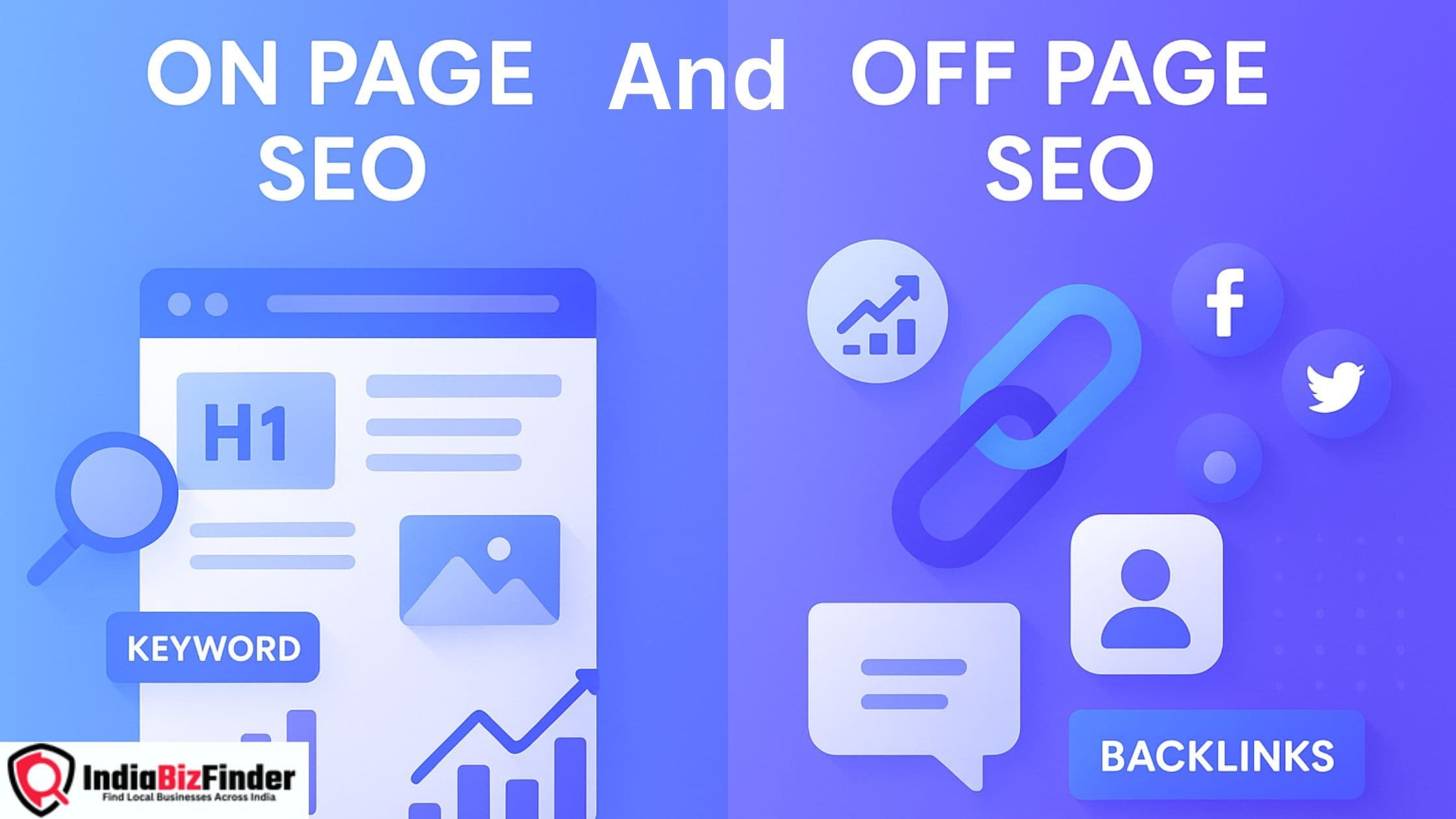
Search Engine Optimization (SEO) continues to evolve every year, yet two fundamental pillars remain constant: on page SEO and off page SEO. Whether you are a business owner, digital marketer, blogger, or SEO beginner, understanding the difference between these two core strategies is essential for building long-term search visibility.
In this comprehensive blog, we will explore what on page and off page SEO are, why they are important, how they work together, the latest best practices, tools, strategies, examples, and an actionable step-by-step approach to help you master both.
Introduction to On Page and Off Page SEO
To rank on Google—or any other search engine—you need a balanced SEO strategy that focuses on both the internal and external aspects of your website. That’s exactly where on page and off page SEO come in.
On page SEO refers to all optimization techniques done within your website.
Off page SEO covers all promotional efforts done outside your site.
Both are equally important, and neither can rank a website alone. If on page SEO builds the foundation, off page SEO acts as the popularity booster.
What Is On Page SEO?
On page SEO is the practice of optimizing website content, structure, HTML elements, and user experience to help search engines understand what your pages are about.
It ensures that your website:
is readable for search engines
meets search intent
loads fast
provides valuable content
is easy to navigate
follows Google’s technical requirements
On page SEO is 100% in your control, which is why every website must start with strong on page optimization before focusing on off page SEO.
Key Elements of On Page SEO

Below are the major on page SEO factors that directly influence rankings.
Keyword Research & Optimization
Keyword research ensures that your content matches user intent.
Key practices include:
Using the main keyword “on page and off page SEO” naturally
Adding secondary keywords and semantic variations
Avoiding keyword stuffing
Targeting long-tail keywords for better ranking opportunities
High-Quality Content Optimization
Google rewards websites that publish helpful, original, and well-structured content.
Important content signals include:
E-E-A-T (Experience, Expertise, Authoritativeness, Trust)
Content depth and accuracy
Use of headings (H1, H2, H3)
Inclusion of examples, stats, and visuals
Proper keyword placement
Title Tags and Meta Descriptions
Title tags should be compelling and include the main keyword.
Example:
Title: “On Page and Off Page SEO: The Complete Guide for 2026”
Meta descriptions should summarize the content and encourage clicks.
URL Structure
SEO-friendly URLs:
are short
descriptive
contain the main keyword
avoid numbers and unnecessary characters
Example URL:
/on-page-and-off-page-seo-guide
Header Tags
Proper use of H1, H2, and H3 helps Google understand page structure.
Image Optimization
Optimized images:
have descriptive file names
include alt text
are compressed for fast loading
Internal Linking
Internal links help distribute authority across your pages and improve user experience.
Page Speed Optimization
Fast-loading pages rank higher. Improve speed by:
compressing images
reducing server response time
using caching
minimizing CSS/JS
Read More:
Advantages and Disadvantages of Digital Marketing
Which On Page Element Carries the Most Weight for SEO
Mobile-Friendly Design
More than 65% of global traffic is mobile, making responsive design essential.
Technical SEO
Technical on page elements include:
XML sitemaps
robots.txt
canonical tags
schema markup
HTTPS security
What Is Off Page SEO?
Off page SEO refers to all external activities that promote your website and increase its authority, reputation, and trustworthiness.
These actions happen outside your website but strongly influence your ranking.
Off page SEO is mainly about:
backlinks
brand mentions
social signals
reputation management
Google views backlinks as “votes of trust.” The more quality links pointing to your site, the more authoritative your website becomes.
Key Elements of Off Page SEO

Link Building
The most powerful off page SEO technique.
Types of backlinks:
Editorial backlinks
Guest posting backlinks
Social profile backlinks
Business listing backlinks
Forum & community backlinks
Blog comment links
Broken link building
Quality matters more than quantity.
Guest Posting
Publishing content on other websites to get:
referral traffic
backlinks
brand exposure
Such a powerful website is RewardBloggers.com
Social Media Signals
While social signals are not direct ranking factors, they improve:
brand visibility
traffic
content reach
Brand Mentions
Unlinked brand mentions help build trust and brand identity.
Influencer Marketing
Collaborating with influencers increases:
authority
social proof
traffic
Local SEO & Citations
Local citations include:
business listing directories: IndiaBizFinder.com
NAP consistency (Name, Address, Phone)
Google Business Profile optimization
Reviews & Reputation Management
Google trusts businesses with positive, authentic customer reviews.
Communities & Forums
Participating in niche communities builds authority and trust.
On Page vs Off Page SEO: What’s the Difference?
| Factor | On Page SEO | Off Page SEO |
| Location | Inside website | Outside website |
| Control | Fully controllable | Partially controllable |
| Focus | Content, structure, technical optimization | Link building, authority, promotion |
| Goal | Improve relevance | Improve credibility |
| Importance | Foundation | Growth & exposure |
How On Page and Off Page SEO Work Together
Think of your website like a house:
On page SEO builds and strengthens the house.
Off page SEO invites people to visit and recommend it.
If your on page SEO is weak, backlinks won’t help.
If your off page SEO is weak, even great content won’t rank.
A perfect SEO strategy balances both.
Best Practices for On Page SEO
Here are proven on page SEO techniques for 2026:
Use clear and descriptive headings
Optimize for search intent
Maintain proper keyword density
Solve user problems with depth
Add schema markup
Optimize images and videos
Improve page speed (Core Web Vitals)
Maintain internal linking
Keep URLs clean and readable
Regularly update old content
Best Practices for Off Page SEO
Boost your authority using these off page SEO strategies:
Build high-quality backlinks
Avoid spammy or low-quality links
Publish guest posts on authoritative websites
Promote your content on social media
Build partnerships and collaborations
Get listed on trusted directories
Focus on brand awareness
Encourage user-generated content
Participate in communities and Q&A platforms
Monitor your backlink profile regularly
Common SEO Mistakes to Avoid
On Page SEO Mistakes
Overusing keywords
Thin content
Missing meta tags
Slow loading pages
Using duplicate content
Off Page SEO Mistakes
Buying toxic backlinks
Over-submitting to directories
Excessive forum/comment spam
Ignoring brand building
Doing link building too fast
Latest SEO Trends in 2026

The SEO world is evolving. Here’s what’s trending:
AI-powered search & SGE (Search Generative Experience)
Topic clusters and content hubs
E-E-A-T importance growing
High-quality backlinks valued more
User engagement signals matter more
Voice & mobile search optimization
Brand authority influencing rankings
Tools to Improve On Page and Off Page SEO
On Page SEO Tools
Google Search Console
Google Analytics
Screaming Frog
SurferSEO
Yoast SEO / RankMath
PageSpeed Insights
Ahrefs Site Audit
Off Page SEO Tools
Ahrefs
SEMrush
Moz
BuzzSumo
Majestic
Hunter.io (for outreach)
Expert Tips for SEO Beginners
Start with on page SEO first
Publish high-value content consistently
Build natural, relevant backlinks
Don’t chase quick ranking hacks
Track performance and update strategies
Focus on user experience (UX)
Treat SEO as a long-term investment
Read More:
Which Activities Will Not Help With Lead Generation
How to List Your Business for Free
120+ Best Free Business Listing Sites in India
Conclusion On page and Off page seo
Mastering on page and off page SEO is essential for long-term organic growth. On page SEO ensures your website is optimized, structured, and relevant, while off page SEO builds authority, trust, and popularity across the web.
For best results:
First, build a strong on page SEO foundation.
Next, use off page SEO to strengthen visibility and ranking.
Keep updating your SEO strategies as algorithms evolve.
By balancing both, you create a powerful, future-proof SEO strategy that drives consistent traffic and long-term success.
FAQs
1. What is the main difference between on page and off page SEO?
On page SEO happens within your website; off page SEO includes all external promotional efforts.
2. Which is more important: on page or off page SEO?
Both are equally important and should work together.
3. Can a website rank with only on page SEO?
It can rank for low-competition keywords, but off page SEO is necessary for competitive terms.
4. What is the most important factor in off page SEO?
High-quality backlinks.
5. How long does SEO take to show results?
Typically 3–6 months depending on competition, content quality, and backlinks.
6. What is the difference between onsite and offsite SEO?
Onsite SEO optimizes elements within your website—content, keywords, technical structure, and user experience.
Offsite SEO builds your website’s authority externally through backlinks, mentions, and social signals.
7. What are the 4 types of SEO?
The four types of SEO are:
On-page SEO – optimizing content and HTML elements.
Off-page SEO – building authority through backlinks and external signals.
Technical SEO – improving site speed, crawlability, and structure.
Local SEO – optimizing for location-based searches.
8. What is an example of on-page SEO?
Examples include optimizing title tags, meta descriptions, headings, URLs, internal links, image alt text, and keyword-rich high-quality content.
9. What are the 3 C’s of SEO?
The 3 C’s of SEO are:
Content – quality, relevance, and keyword optimization.
Code – technical structure, HTML, and site performance.
Credibility – backlinks, authority, and trust signals.
10. Which is an example of off-page SEO?
Examples include building backlinks, guest posting, influencer outreach, social media promotion, brand mentions, and directory submissions.